
Sheffield Voice: Sheffield Townhomes News & Resources (Schaumburg, IL 60194)
Sheffield Townhomes homeowners and buyers need clear, local information. Therefore, Sheffield Voice organizes meetings, news, concerns, legal topics, and practical checklists in one fast site.
Start here
Sheffield Townhomes (60194)
Use the buyer & homeowner checklist. Additionally, see key pages in one place.
Board meetings
Get meeting-ready questions, agendas, and follow-up steps.
Featured story: towing & enforcement
Read a homeowner’s account and the respectful path forward.
Maintenance concerns
See a structured list of issues and requested actions.
Guides & resources
Send a tip
If you have photos, letters, or a timeline, you can submit a story. Additionally, include dates and locations so the report stays clear.
On this page: archive content
Below is reorganized content preserved from the previous site files so nothing is lost. We kept it searchable, but we also improved the layout for mobile reading.
A Guide for Proactive Townhome Ownership
Meten is Weten
We are growing fast at 8.59K Unique Monthly Visitors!
Sheffield Townehomes Owners
Are You Asking These Questions at Board Meetings?
Board Meeting
Monday, July 27
7:00 PM - 8:30 PM

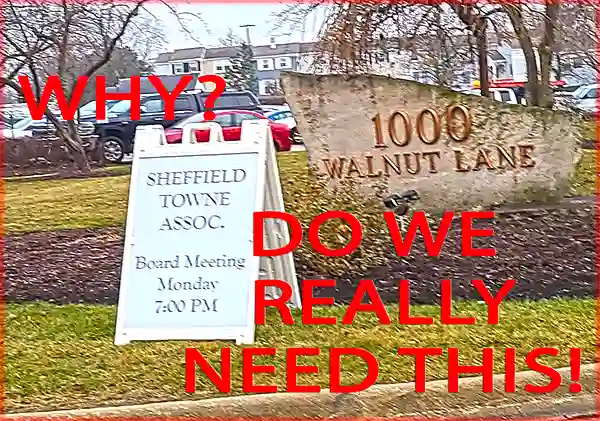
Why did the Sheffield Board of Directors Changes the Name of OUR Associaction Website?
Homeowner Concerns:
I was DMed this message last week.
Hi there. Please keep me anonymous.
Heads up, Roy is driving around the properties taking pictures of cars with expired tags and having them towed. Its happened to a few on our block.
This even happened to me while i was installing a front and back camera system that would record even when the car is park and off. So one Hour before my cat doctor appointmet I saw my car being towed away. Cost me $245 to get it back! Thanks Roy Porter.
Freedom of SPEECH and the FREEDOM to Voice oneself in whatever forums are available.
Understanding the Consequences of Skipping Soil Aeration in Northern Illinois Lawns
If you're a homeowner in northern Illinois wondering about the impacts of your association's decision to stop aerating the soil many years ago, you're not alone. Many residents in this region, with its heavy clay soils and variable climate, face similar concerns. Soil aeration, the process of creating small holes in the ground to allow air, water, and nutrients to penetrate, is crucial for maintaining healthy lawns. However, when aeration is neglected over time, several ramifications emerge, leading to long-term consequences that can affect your yard's vitality. In this guide, we'll explore these effects in detail, drawing on expert insights to help you understand what might be happening beneath your feet. Whether you're dealing with patchy grass or poor drainage, recognizing these issues early can prevent further deterioration.

Immediate Ramifications of Not Aerating Your Lawn
First and foremost, stopping soil aeration often results in increased soil compaction, especially in northern Illinois where clay-heavy soils are prevalent.[1] This compaction occurs because foot traffic, mowing equipment, and natural settling compress the soil particles, reducing pore spaces. As a result, roots struggle to expand deeply, leading to shallower root systems that are less efficient at absorbing water and nutrients.[4] Additionally, poor air circulation in compacted soil hinders beneficial aerobic bacteria, which are essential for breaking down organic matter and making nutrients available to plants.[8]
Furthermore, without regular aeration, water infiltration slows down dramatically. Rain or irrigation may pool on the surface instead of soaking in, causing runoff and potential erosion. This is particularly problematic during northern Illinois' wet springs or heavy summer storms, where standing water can drown roots and promote fungal diseases.[7] In contrast, aerated soil allows for better drainage, reducing these risks and supporting healthier turf.[9]

A visual comparison of an aerated lawn (left) with healthy grass and deep roots versus a non-aerated lawn (right) showing compacted soil and sparse grass in Northern Illinois.
Long-Term Consequences for Your Northern Illinois Yard

Why has Scott Aldrich and Roy Porter allowed our lawns to become so unhealthy? For that matter were is the grass let alone deep roots Sheffield Towne Association.
Over the years, the effects compound, transforming minor issues into significant challenges. For instance, persistently compacted soil weakens grass overall, making it more susceptible to drought stress, even in a region with moderate rainfall like northern Illinois.[1] Therefore, lawns may thin out, inviting weeds to take hold since healthier grass typically outcompetes invaders.[6] Moreover, reduced resilience means your yard could suffer more from extreme weather, such as the area's cold winters or hot summers, exacerbating problems like frost heaving or heat-induced dormancy.[3]
In the long run, neglecting aeration can lead to a cycle of declining soil health. Nutrient uptake diminishes, fertilizer becomes less effective, and the lawn may require more frequent watering or chemical treatments to stay green—ironically increasing maintenance costs.[9] However, not every lawn needs annual aeration; factors like soil type and usage play a role. A simple screwdriver test—if it's hard to push into the ground—indicates compaction and the need for intervention.[2] Ultimately, without addressing this, your association's lawns might experience reduced vigor, higher vulnerability to pests, and an overall unkempt appearance that could impact property values.
To mitigate these consequences, consider resuming aeration in fall when soil temperatures are ideal (around 60-75°F) for recovery in Illinois.[0] This timing allows grass to heal before winter, promoting stronger roots for the next season.
References
- Lawn Aeration and Overseeding | Good Growing - Illinois Extension - Discusses the best practices for aerating lawns in Illinois, including timing and soil conditions.
- Answers to Common Questions About Lawn Aeration for Illinois - Explains why aeration is necessary in Illinois due to heavy clay soils and compaction issues.
- Is aeration really necessary every year? : r/lawncare - Reddit - Community discussion on soil testing methods like the screwdriver test to check for compaction.
- When Is It Too Late to Aerate and Overseed Your Lawn? - LawnStarter - Covers consequences like vulnerability to frost and weather stress from improper timing.
- What happens if you don't aerate your lawn? - Quora - Describes how lack of aeration leads to root struggles and potential plant death.
- Will Aeration Help My Lawn? Exploring What it Will & Won't Do - Highlights how aeration improves soil health, leading to thicker grass and fewer weeds.
- Are there any studies showing the efficacy (or not) of aerating? - Forum discussion on aeration's role in preventing water damage and root drowning.
- Avoiding Lawn Problems - Illinois Extension - Recommends repeated aeration to reduce soil compaction and improve organic matter integration.
- Benefits of Lawn Aeration: Especially in the Fall - M2 Landscaping - Details how compacted soil causes poor absorption, runoff, and stifled grass growth.
Sheffield Towne Association – Fall Landscaping Questions
Use this list to engage the Board of Directors on seasonal maintenance, soil health, and long-term property care.
Soil Health & Aeration
- When was the last time the association aerated the common area lawns?
- Has the board considered the negative impacts of skipping aeration in clay-heavy Northern Illinois soils?
- Is there a budgeted plan for fall aeration and overseeding?
- Will the association perform a soil compaction test or use the screwdriver test to determine need?
Leaf & Debris Management
- What is the fall leaf cleanup schedule for common areas, walkways, and storm drains?
- How will leaves be disposed of—mulching, composting, or hauling away?
- Is there a plan to clear gutters and drainage swales before winter?
Trees & Shrubs
- Are diseased, dead, or hazardous trees being inspected and removed before winter storms?
- Will trees and shrubs be trimmed back to prevent damage to siding, roofs, and sidewalks?
- Has the board considered native or resilient species for replacements?
Drainage & Erosion
- Are there areas of pooling water or poor drainage that need correction before freeze-thaw cycles worsen them?
- What steps are being taken to prevent soil erosion along common pathways and retention ponds?
Lawn & Turf Care
- Will the board approve fall fertilization to strengthen lawns for winter?
- How is weed management being handled during fall, especially invasive species like creeping charlie or thistle?
- Are contractors overseeding thin lawn areas to prevent weed spread?
Winter Preparation
- Has the association secured contracts for snow removal and salt application?
- What de-icing methods will be used to minimize damage to lawns, sidewalks, and the environment?
- Will grass along sidewalks and curbs be protected from plowing damage?
Contracts & Budget
- Which landscaping contractor is currently under contract, and when was the last bid comparison done?
- Is the association tracking landscaping expenses versus reserves for long-term replacement (trees, irrigation, turf rehab)?
- How is landscaping tied to maintaining curb appeal and property values for resale?
What Counts as Retaliation?
- Excessive or arbitrary fines: Imposing unjustifiably high penalties. ∠
- Selective rule enforcement: Targeting specific residents while ignoring others. ∠
- Denial of amenities: Revoking access to community services unfairly. ∠
- Harassing communication: Sending constant threats or hostile messages. ∠
- Legal threats and SLAPP suits: Using lawsuits to silence residents. ∠
New to Explore
- Revenge Property Management, where HOAs retaliate against residents. Understand common retaliation tactics, real examples, and legal protections.
- Why are ther so many legal issues for the Sheffield Towne and what have they cost us?
- What is the real purpose of the camera security system with facial recognition?
- Why are Board Members Allowed to Smoke in Public Buildings at 1000 N. Walnut Ln?
- New E-Bike and E-Scooter Ordinance | Village of Schaumburg
- Cook County Property Tax Savings
- PARKWAY TREE CARE! MULCHING & PRUNING
Step-by-Step Guide to Painting Neglected Wood Siding
How long will at last?
Painting wood siding that's been neglected for decades requires extensive preparation to address issues like weathering, peeling paint, cracks, and potential rot. Skipping steps can lead to paint failure, so prioritize repairs and surface prep. This process can take several days or weeks, depending on the house size and damage extent. Always work in dry, mild weather (ideally 50-85°F with low humidity) to avoid issues with adhesion or drying. Wear protective gear like gloves, safety glasses, and a dust mask (N95 or better) to handle dust, chemicals, and old paint that may contain lead—test for lead if the house predates 1978 and follow EPA guidelines for safe removal.
Tools and Materials You'll Need
- Tools: Pressure washer, paint scraper, wire brush, sandpaper (100-150 grit) or orbital/belt sander, putty knife, caulking gun, hammer, pry bar, brushes/rollers/sprayer, drop cloths, painter's tape, ladder/scaffolding.
- Materials: Mild detergent or wood cleaner, wood filler (epoxy-based like Abatron WoodEpox for durability), caulk (paintable silicone like GE Supreme), wood preservative (optional, like Wolman's Woodlife Classic), primer (oil-based for weathered wood), exterior paint (acrylic or latex, 100% acrylic for best weather resistance, e.g., Sherwin-Williams Emerald Exterior), stainless steel nails, house wrap or rainscreen (if replacing sections).
- Optional: Epoxy consolidant (like Abatron LiquidWood) for rotted areas, rust converter for nails.
1. Inspect and Repair Damaged Sections
Start by thoroughly inspecting the siding for rot, cracks, splits, loose boards, or insect damage—neglected wood often absorbs water easily, leading to decay. Walk around the house and probe soft spots with a screwdriver.
- If sections are rotten or severely damaged, carefully remove them using a pry bar to avoid splitting adjacent boards. Score any caulk first and use wire cutters to pull out old nails.
- For minor rot, apply an epoxy consolidant like LiquidWood to harden the wood before filling.
- Replace removed boards with matching siding, leaving an air gap and adding house wrap (e.g., Typar) for moisture control. Nail loose boards with stainless steel siding nails—remove rusted ones or treat with rust converter.
- Glue end cracks with a strong adhesive like polyurethane glue or LiquidWood for longevity.
- Tip: Only remove 2-3 boards at a time if your house has blown-in insulation to prevent it from spilling out. Do not use regular wood glue or non-epoxy fillers, as they won't withstand weather.
- Warning: If lead paint is present, use wet scraping methods and dispose of debris properly to avoid health risks.
2. Clean the Siding
Remove dirt, mildew, and loose debris to ensure paint adheres well—neglected siding can harbor mold or grime that causes bubbling.
- Mix a mild detergent with water (or use a wood-specific cleaner) and apply with a garden sprayer or brush.
- Use a pressure washer on a low setting (1,500-2,000 PSI) to blast away buildup, starting from the top and working down. Avoid high pressure to prevent damaging the wood or forcing water behind boards.
- Rinse thoroughly with clean water and let dry completely (1-3 days, depending on weather)—test dryness by pressing a paper towel against the wood.
- Tip: For heavily soiled areas, add a mildew remover. Do not pressure wash if the wood is extremely weathered, as it could splinter; brush clean instead.
3. Scrape and Sand the Surface
Remove all loose, peeling, or flaking paint—decades of neglect often mean multiple layers that need stripping for a smooth base.
- Use a paint scraper and wire brush to chip away unstable paint. Feather the edges of remaining paint by sanding lightly to blend transitions.
- Sand the entire surface with 100-150 grit sandpaper or a sander to remove residue, smooth rough spots, and expose fresh wood for better adhesion. Focus on grayed or weathered areas.
- Blow or wipe off dust afterward.
- Tip: For thick old paint buildup, consider a chemical stripper (follow safety instructions) or heat gun, but test in a small area first. Wear a respirator for dust.
- Common Mistake: Skipping this step leads to poor paint bonding and early peeling.
4. Fill Cracks, Holes, and Caulk
Address imperfections to prevent water intrusion, which is a major issue with neglected siding.
- Fill holes, gouges, or splits with epoxy wood filler (like WoodEpox)—apply with a putty knife, let cure, then sand flush.
- Caulk cracks and seams (except the bottom overlap of boards to allow moisture escape) using paintable silicone caulk. Smooth with a wet finger.
- Tip: For end-grain or absorbent wood, apply a paintable wood preservative first to seal against rot.
- Warning: Over-caulking can trap moisture, leading to rot—leave drainage gaps.
5. Prime the Siding
Primer is crucial for old wood to seal pores and promote even paint coverage.
- Apply an oil-based or high-quality exterior primer with a brush or roller, working top to bottom in sections. Use a stain-blocking primer if there's mildew or tannins.
- Let dry per manufacturer instructions (usually 24 hours).
- Tip: For very weathered gray wood, prime twice. This step extends paint life by 5-10 years.
- Common Mistake: Using cheap primer or skipping it—old wood soaks up paint unevenly without it.
6. Apply the Paint
Choose a high-quality exterior paint rated for wood—semi-gloss or satin for easy cleaning.
- Protect surroundings with drop cloths and tape off trim/windows.
- Paint trim and edges first with a brush, then roll or brush the siding in small sections, following the wood grain. Use a W or M motion for even coverage.
- Apply 2-3 thin coats, allowing full drying (4-24 hours each) between them—more coats for dark colors or severe neglect.
- Inspect and touch up as needed; remove tape while paint is tacky.
- Tip: Use a sprayer for efficiency on large areas, but back-brush to work paint into grooves. A top coat of sealer can add protection.
- Common Mistake: Thick coats cause drips and uneven drying; rushing without full dry time leads to tackiness.
Final Tips and Maintenance
- Total cost: $0.50-$2 per sq ft for materials; hire pros if the job is extensive or you're uncomfortable with heights/repairs.
- Expect the new paint to last 8-15 years with proper prep—inspect annually for cracks and clean gently.
- If the neglect is extreme (e.g., widespread rot), consult a professional to assess structural integrity.
- Eco-tip: Use low-VOC paints to minimize fumes.
Addendum: Consequences of Skipping Surface Preparation
While the main guide emphasizes thorough preparation for painting neglected wood siding, it's crucial to understand the risks and issues that arise if you skip or inadequately perform surface preparation steps like inspecting/repairing, cleaning, scraping/sanding, filling/caulking, and priming. Neglecting these can lead to premature paint failure, costly repairs, and even structural damage over time. Below are the key problems associated with no or poor preparation:
- Poor Adhesion and Peeling: Without scraping off loose paint or sanding to create a smooth, clean surface, new paint won't bond properly to the old layers or weathered wood. This results in bubbling, cracking, or peeling shortly after application—often within months—exposing the wood to further deterioration.
- Moisture Trapping and Rot: Unrepaired cracks, holes, or rotted sections allow water to penetrate behind the paint. Skipping caulking or filling exacerbates this, leading to trapped moisture that causes wood rot, mold growth, and structural weakening. Over time, this can compromise the siding's integrity and require full replacement.
- Uneven Appearance and Staining: Dirt, mildew, or old paint residues left uncleaned can bleed through the new paint, causing discoloration, streaks, or an uneven finish. Weathered gray wood absorbs paint inconsistently without priming, resulting in blotchy coverage that looks unprofessional and fades quickly.
- Reduced Paint Longevity: Proper prep can make paint last 8-15 years, but skipping it might reduce this to 1-3 years. Factors like unaddressed lead paint hazards or rusting nails can accelerate failure, leading to frequent repainting and higher long-term costs.
- Health and Safety Risks: Neglected surfaces may contain lead dust or mold spores, which become airborne during painting without safe removal methods. This poses health risks, especially in older homes, and could violate EPA regulations if lead is present.
- Increased Costs and Effort: Initial shortcuts often lead to rework, as failed paint jobs require stripping everything and starting over. Severe neglect without prep might hide underlying issues like insect damage or rot, turning a simple paint job into an expensive siding replacement.
Recommendation: Always allocate at least 70-80% of your project time to preparation—it's the foundation for a durable, attractive result. If the siding is extremely neglected, consider professional assessment to avoid hidden problems.
SHEFFIELD TOWNE TRASH CAN PLACEMENT

With warmer weather arriving and schools out for summer break, Schaumburg residents are reminded to avoid blocking on-street bike lanes and roadways when placing their garbage carts out for collection. Carts should be set at the curb, specifically on the driveway apron in the parkway—not in the street—by 7 a.m. on your regular collection day. Carts may be set out as early as 6 p.m. the evening before, now through Sept. 30.
When setting out your cart, make sure the handles face your property and the lid opens toward the street. Arrows on the lid indicate the correct direction to help ensure LRS trucks can easily pick up the cart.
For information on how to dispose of bulk items, establish an appointment for the collection of white goods, and other information related to garbage and recycling collection, visit the website, view the Residential Garbage & Recycling Information brochure, or contact LRS directly at (844) 633-3577.
Sheffield Towne Association
A Historical Timeline and Key Details
Download Sheffield Towne Association:
Historical Timeline as a PDF
Great. I’ll compile a detailed and chronological profile of the Sheffield Towne Association, located at 1000 Walnut Ln, Schaumburg, IL, 60194, from its incorporation in the early 1970s to the present.
This will include:
- Historical overview and origin
- Timeline of major events
- Legal actions and complaints (minor and major)
- Full list of current and past board members and property managers
- All publicly available documents
- Content from the official website https://www.usa.gov/education?source=kids, news sources, government databases, and social media where available
I’ll let you know once the information is ready for your review.
Historical Timeline and Key Details
1970s – Founding and Early Development
-
Incorporation and Development (1970–1975): The Sheffield Towne Association was established in the early 1970s as a homeowners’ association for a new townhouse community in northwest Schaumburg. The development (approximately 592 townhomes on 44 acres) was built by Levitt & Sons between 1970 and 1975. The association was officially incorporated on June 5, 1970 under Illinois’ General Not‑for‑Profit Corporation Act. The initial Articles of Incorporation listed the name “Sheffield Towne Association” and set the corporation’s duration as perpetual.
A Declaration of Covenants, Restrictions, Easements, Charges and Liens was executed by Levitt & Sons on June 5, 1970 and recorded in October 1970. In late 1970, the developer amended the declaration to revise parking provisions (ensuring each lot a designated parking space).
-
Initial Board and Governance: Upon incorporation, a first Board of Directors of nine members (all affiliated with the developer) was appointed: James Leakou (first registered agent), Weston Till, Lawrence Soifer, Robert Brandwein, Allan Schlossberg, Robert Craig, William Witte, Anthony DiTore, and Bernadette Brown, all at the developer’s Schiller Park address.
-
Transition to Homeowner Control: The governing documents established a two-class membership: Class B for the developer (with 5 votes per unsold lot) and Class A for homeowners. After October 1, 1973—or once 590 developer votes were sold—the Class B votes converted to Class A, shifting control to homeowners. By late 1973, a homeowner-elected board of nine members took over, with staggered 1–3 year terms.
-
Parks and Amenities: The community featured a clubhouse, pool, tennis courts, basketball court, volleyball area, playground, and the public Sheffield Ridge Park. In 1978, Sheffield Towne leased one acre to the Hoffman Estates Park District to build and maintain a playground within the subdivision.
1980s–1990s – Community Growth and Governance
-
Matured Community: By the 1980s, Sheffield Towne was fully occupied. The homeowner-elected Board enforced covenants, maintained common areas, and held regular meetings. Homeowner assessments funded landscaping, pool and clubhouse upkeep, snow removal, and other services.
An early covenant capped HOA debt at $10,000 under developer control, later 150% of prior year income without 2/3 membership approval.
-
Amenities and Maintenance: Periodic upgrades occurred in the 1980s–1990s, and by the 2000s the pool was modernized with a stainless‑steel gutter system and computerized filtration.
-
Community Identity: Known as a quiet, family-friendly enclave, residents praised maintenance levels in early years, noting later reductions in services like doorstep snow removal.
2000s – Management Changes and Capital Upgrades
-
Shift to Self-Management (2004): In 2004, the HOA hired Randy Brown as on-site Property Manager, moving away from external firms. An office administrator was added at 1000 N. Walnut Lane.
-
Board Leadership: Oliver Merriam served as President c. 2004, guiding maintenance budgets and rule enforcement during self‑management transition.
-
Capital Improvements: Late‑2000s saw major pool renovations, playground and sports court upgrades, bringing facilities to modern standards.
-
Controversies: The board’s acquisition of an Oxford Court townhome for employee housing rent‑free drew homeowner criticism over lost rental income.
2010s – Modernization, New Leadership, and Resident Activism
-
Professional Oversight & Online Presence: Under Illinois’ CICAA, Sheffield Towne adopted open‑meeting and records policies. A public website and private portal launched via AssociationVoice.
-
Board Leadership: John Noonan served as President until 2017, when Mark Johnson—a board member since 2012—became President and led document revision efforts.
-
Community Improvements: Basketball and tennis courts, playgrounds, pool, and clubhouse were refreshed. Annual events included pool parties, National Night Out, and community yard sales.
-
Resident Activism: The “Sheffield Towne Voice” site (2018–2019) emerged to spotlight maintenance, proxy‑voting, and transparency concerns, urging audits and reform.
-
Management Personnel: Randy Brown transitioned out, with Roy Porter becoming Property Manager and Darshana “Darshi” Shah as Office Manager.
-
Rental Challenges: Disputes over lease non-renewals and maintenance quality among investor‑owned rentals highlighted the board’s enforcement complexities.
2020s – Recent Developments, Legal Actions, and Current Leadership
-
Owner‑Only Board (2022): New law required board members be deeded owners; Chuck Watson (a renter) stepped down, replaced by his wife.
-
Document Revision Campaign (2021–2024): President Mark Johnson led a campaign to amend and restate the Declaration and Bylaws. Despite high turnout, supermajority approval remained just out of reach, prompting extended voting deadlines.
-
Board Transition (2024): Mark Johnson stepped down May 28, 2024; Scott Aldrich was appointed President in June 2024.
-
Current Board & Staff: 2024 Board: Scott Aldrich (President), Mark McLean (Secretary), Edward Callahan (Treasurer), Tom Kunzer, Bruce Lund, Victor Solorzano, Barbara Hopkins. Staff: Roy Porter (Property Manager), Darshana Shah (Office Manager), maintenance crew Efren Rodriguez, William Sell, Juan Cortes; clubhouse supervisors Shaheena Begum, Syed Mahmood.
-
Communications: Monthly Mailchimp newsletter post updates, meeting minutes, forms, and notices. Contacts: staoffice@ sheffieldtowne. com, bodpresident@ sheffieldtowne. com.
-
Legal Matters:
- Assessment Collections & Liens for delinquent fees.
- Premises Liability Lawsuit: Merly Gerson vs. Sheffield Towne (Cook County, No. 21 L 001763, 2021).
- Internal governance disputes managed via extended voting, no lawsuits.
- Regulatory compliance under IL Not‑for‑Profit Act and CICAA without administrative actions.
-
Resident Feedback: 2022–2023 Google/Yelp reviews mix praise for amenities with complaints about unprofessional staff behavior and “bandaid” maintenance. The board under Scott Aldrich has pledged to listen and adapt.
-
Looking Ahead (2025): Top priorities: finalize document amendments, address 50+ year‑old infrastructure, rebuild trust via open meetings, newsletters, and events like National Night Out (Aug 2024) and summer pool season.
Board Leadership Timeline
| Time Period | Leadership / Notable Members | Notes |
|---|---|---|
| 1970–1973 | James Leakou; Weston Till; Lawrence Soifer; Robert Brandwein; Allan Schlossberg; Robert Craig; William Witte; Anthony DiTore; Bernadette Brown | Developer-appointed 9-member board under Levitt & Sons |
| 1974–2000 (approx) | Homeowner-elected boards (names not publicly recorded) | Control shifted to homeowners; 9-member boards with volunteers |
| Mid-2000s (c.2004) | Oliver Merriam (President) | Led transition to self-management |
| Early–Mid 2010s | John Noonan (President) | Pre‑2017 leadership |
| 2017–May 2024 | Mark Johnson (President) | Document revisions; stepped down 2024 |
| June 2024–Present | Scott Aldrich (President) | Focusing on transparency & amendments |
Property Management Timeline
| Period | Manager | Notes |
|---|---|---|
| 1970s–1990s | Levitt & Sons / Volunteer board | Developer and volunteer management |
| 2004–c.2010s | Randy Brown | First on-site Property Manager after self-management began |
| 2010s–Present | Roy Porter | Current Property Manager; resident complaints about style |
| 2010s–Present | Darshana “Darshi” Shah | Office Manager / Assistant Property Manager since ~2011 |
Sources Cited
- Sheffield Towne Voice “About Us” and historical records
- Articles of Incorporation & developer covenants (1970)
- Declaration amendment (Oct 1970)
- Manta/Buzzfile business profiles (John Noonan as President)
- Hoffman Estates Park District lease (1978)
- Board communications (Mark Johnson’s farewell; Scott Aldrich’s intro, June 2024)
- 2024 newsletters (projects & amendment updates)
- Sheffield Towne Voice site (board & management notes)
- Yelp & Google reviews (2018–2023)
- Transparency HOA data (self-managed status, unit count)
Sources:
- Board decision to hire in‑house manager (Randy Brown, 2004); reference to Randy’s role; current management identified on association site (Roy and Darshana); resident commentary on management personnel.
Sources Cited:
- Development and founding details from Sheffield Towne Voice “About Us” and historical records.
- Articles of Incorporation and developer covenants (1970).
- Amendment of Declaration (Dec 1970).
- Manta/Buzzfile business profiles for Association (incorporation in IL, listing of John Noonan as President).
- Hoffman Estates Park District references (one‑acre playground lease in 1978).
- Board communications – e.g. Mark Johnson’s 2024 farewell message and Scott Aldrich’s introduction (June 2024).
- Sheffield Towne official newsletters (2024 editions) for ongoing projects, amendment campaign updates, and event announcements.
- Sheffield Towne Voice site for historical notes (e.g. past board members, management decisions).
- Yelp and Google reviews for resident feedback on management and maintenance (2018–2023).
- Sheffield Towne Voice “Homeowner Reviews” compilation for direct quotes of complaints.
- Transparency HOA data confirming self‑managed status and units count.
Each entry above is backed by the cited source(s) in brackets. This chronological account provides a comprehensive overview of Sheffield Towne Association’s history – from its incorporation and early developer control, through decades of homeowner governance, infrastructure improvements, legal and regulatory changes, up to the current board’s efforts to modernize the community’s charter and address resident concerns. The Association’s journey reflects the broader evolution of homeowner associations over time, balancing the need to uphold property values and rules with the importance of transparency and resident satisfaction.
Be aware of recent push to FINALLY do YEARS of over do TREE trimming and other Neglected Landscaping! Homeowners VS Association Law
Don't give them cart blanch with your proxy vote. If you do then ONLY FOUR will decide the FATE for Five Hundred and Ninty two homeowners.
VERY BAD FOR ALL OF US!
Have you ever wondered why the Sheffield Towne Association can only contract substandard contractors? For example, LANSCAPERS. Why did they use the same contractor that Even Past President and, past president, knew people were unhappy with for over a decade? We'll be telling that story soon.
Elections: Conducting well-run elections with scrupulous integrity and honesty is an essential function of every association. It's of utmost importance that every association follow the rules for conducting an election that complies with Illinois law. If owners are going to trust the members of the boards that govern the affairs of their association, they first must have confidence that their election was fair and lawful.
Welcome to Sheffield Towne Voice a vibrant community of 592 town homes nestled in the scenic northwest of Schaumburg. Constructed by the esteemed Levitt & Sons from 1970-1975, our neighborhood boasts forty-four acres of professionally landscaped common areas, with a history-rich clubhouse that once served as the original sales office. This is your Sheffield Towne Association, source for the latest community news, events, and homeowner services.
Who is Permitted to Vote in the Election?
With few exceptions, only unit owners, who are members of the association, may vote in the Association’s election. An issue may arise from time to time when a spouse of a unit owner seeks to vote in the Association’s election. However, unless the spouse possesses ownership in the unit, a spouse is not permitted to vote.
One permitted exception to the general rule is that individuals who are “installment contract purchasers” may vote in board elections. An installment contract purchaser is one who has a contract in which a seller agrees to sell a unit, and the consideration for the sale is payable in installments for a period of at least one year after the buyer takes possession of the unit. In this type of transaction, the seller continues to have an interest in the property. In such a case, the installment contract purchaser has the right to vote in the board election unless the seller expressly retains such right in writing.
An additional exception exists where a unit is held in a trust or corporation. The trustee or corporate entity may designate a person to cast a vote on behalf of a trust or corporation and a beneficiary of the trust is also entitled vote.
With few exceptions, only unit owners, who are members of the association, may vote in the Association’s election. An issue may arise from time to time when a spouse of a unit owner seeks to vote in the Association’s election. However, unless the spouse possesses ownership in the unit, a spouse is not permitted to vote.
Ballots & Proxies
Unless the Association has adopted a rule to the contrary, many condominium associations permit owners to vote by proxy. A proxy form may be used when an owner cannot attend the annual meeting to cast a ballot or wishes to submit their vote before the meeting. The proxy form allows the owner to designate an individual (the "proxy holder") to cast their ballot at the annual meeting but is not, itself, a "ballot." IS IT LEGAL FOR THE BOARD TO KEEP EXTENDING THE VOTING DATE? We shall find out!
Section 18 (a)(18) of the Act stipulates that if the Board distributes a proxy, the form must allow the unit owner to designate any person as the proxy holder and express a preference for any of the known candidates for the Board or to write in a name. It's important to note that this rule only applies to proxies distributed by the Board and not to a proxy distributed by a unit owner. Understanding this distinction is key to navigating The proxy usage process. DON'T BE A FOOL.
For owners who prefer to attend the annual meeting in person and cast their vote, the option of voting by ballot is available. The ballot form itself should include the names of all known candidates, and also provide spaces for write-in candidates, who may be identified at the annual meeting. This process ensures that all owners have a fair and transparent opportunity to participate in the voting process.
In some associations, "secret balloting" is also used, per Section 18(b)(10) of the Act. In such elections, the voting ballot is marked only with the percentage of ownership interest for the unit and the vote itself. This process permits the Association to keep the identity of voting owners confidential.
Upcoming Meetings:
Monday, July 27 at 7:00 PM - 8:30 PM
Details about upcoming board meetings and topics of Discussion.
Do Not Give The Sheffield Towne Board Your Proxy Vote EVER!
DID YOU VOTE NO ?
NEVER GIVE YOUR PROXY VOTE TO YOUR ASSOCIATION !
STAoffice@ sheffieldtowne. com! Let's have the board and employees work as hard for the landscaping as they do shoving their agenda down our throats with signage.
Today I saw the entire staff was, yet again, stuffing a letter in our doors. Is this the best use of thier time. And after a 1 hour lunch and 45 minute breaks, 8 AM to 4PM day, as they spent 1/3 of the day in distribution of letter and another 1/5 of the day just driving around in the trucks. Very wasteful of time, our money, and enery wasted!
Giving a proxy vote to the Sheffield Towne board of directors in a homeowners association (HOA) should raise concerns for several reasons.

A proxy vote is a powerful tool in the context of an HOA, as it allows a member to delegate their voting rights to another person, significantly impacting the decision-making process within the association. Here are some reasons why a homeowner might reconsider giving their proxy vote directly to the board of directors:
- Concentration of Power: Giving proxy votes to the board of directors will lead to a concentration of power within a small group of individuals. This will reduce the diversity of opinions and perspectives considered in decision-making processes, potentially leading to decisions that may only reflect the broader interests of some homeowners.
- Potential for Conflict of Interest: Board members may have their interests that could conflict with the best interests of the community as a whole. If board members hold a significant number of proxy votes, they might be tempted to use these votes to influence decisions in their favor rather than in the best interest of all homeowners. The board has a history of self-interest.
As when a board member prevented homeowners from getting cars towed because she had business at her home and did not want her customers to get towed. Or when they approved Randy Brown to be the property Managment . Or when they took over a home on Oxford Ct and allowed their employees to live there, FREE, for years. Unfortunately, I could write about this all day long... - Reduced Accountability: When board members hold many proxy votes, their accountability to the homeowners will be reduced. Since they have enough votes to influence outcomes, they might feel less compelled to justify their decisions or discuss their concerns and suggestions with homeowners. Remember the 5 million Dollar Nightmare we all paid for, but only one-third or fewer got the benefit? We promised all our would get the same upgrades, But we did not!
- Lack of Representation: Every homeowner has unique concerns, priorities, and perspectives. By delegating their vote to the board, homeowners may lose the opportunity to influence decisions that directly affect their property and community life. This will lead to decisions that must adequately represent the community's diverse views and needs.
- Encourages Passivity: Relying on the board to vote on behalf of homeowners will discourage active participation and engagement within the community. It's crucial for the health of the HOA that all members feel encouraged to participate in discussions, attend meetings, and vote on issues directly rather than delegating this responsibility.
To mitigate these concerns, homeowners who cannot attend in-person meetings could consider giving their proxy to a trusted fellow homeowner who shares similar views and interests rather than directly to a board member. This approach will help maintain a balance of power, ensure a diversity of opinions is considered in decision-making, and encourage active participation and engagement within the community.
Sheffield Towne Projects:
Architectural and Landscaping that Need Attention 2024
- Let's get a Fence Replacement Project going in 2024!
- Driveway Replacement with a Qaulity Paving Company
- Curb Replacement
- Remove or Place under ground Comast and ATT Cables
- Replace all the cut-down trees.
- Why are there some stumps and bare patches of lawn? This needs to be fixed ASAP!
- A Lets begin a Save Our Trees program in the Sheffield Towne! We need to address the potential tree removal issue. Property Managment 's comments have raised concerns that we should act to preserve our greenery, a matter we deeply care about, when he told he would like to cut down all the trres, because it would make his job easier.
Empowering Homeowners:
Your Voice Matters
Proxy Voting: A Deliberate Choice Proxy voting is a pivotal tool within any homeowners association (HOA), offering a way to voice your decisions even in your absence. However, entrusting your vote to the board may not always align with the community's best interests. We advocate for a balanced power distribution, urging you to consider assigning your proxy to a trusted neighbor who shares your viewpoints. This fosters diverse decision-making and enriches our community dialogue.
Incomplete Projects and Renovation
Information on Drawing I Renovations the 2008 Feasco renovation project.
So, before you give the Board a eleven month FREE PASS to what ever they what. What happened to Phases II, III, and IV. Major Cost Overrun, Legal Fees, and Running out of MONEY! All of us paid, yet 75% of us are still waiting. Check out this village of Schaumburg report.
Local Services and Merchants
Listing of local services, including appliance repair and dryer vent cleaning.
Sheffield Property Managment and Schaumburg Village Services
CHECK LIST FOR HOA COMPLAINTS at the Sheffield Townhomes
Windsong Schaumburg VS sheffiled Towne Associations in Schaumburg Illinois 60194
Reviews of the sheffiled Towne Association in schaumburg Illinois 60194
Sheffield Towne How to Submit a Story to Agencies and Outlets
Townhomes in the Sheffield Towne Association
Not For Profit Corporation Act of 1986